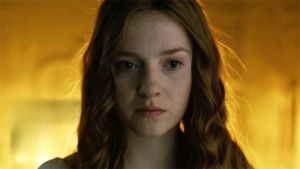
In our Bridgerton Season 4 Episode 1 review, we break down “The Waltz,” a premiere that succeeds because Sophie Baek immediately gives Benedict’s fairytale romance something more important than pretty lighting: real social stakes.
The masquerade gives us everything Bridgerton is supposed to deliver — candlelight, flowers, absurd costumes, orchestral pop covers, yearning, and Violet Bridgerton spending money like subtlety personally offended her. But the episode gets much more interesting once Sophie stops being merely the mysterious Lady in Silver and becomes a woman who exists in a part of Benedict’s world he has never really had to see.
Mary is already all-in on Sophie and the Cinderella story. Blake is much less convinced that the premiere earns Benedict going full Dreamweaver the instant he sees her. That disagreement ends up getting at the central question of “The Waltz”: can this season turn romantic fantasy into a relationship with enough character and class pressure to actually matter?
The short answer: Bridgerton Season 4 Episode 1, “The Waltz,” works because Sophie Baek immediately feels like a real lead rather than simply Benedict’s fantasy. The masquerade romance is gorgeous and Benedict’s instant infatuation is a little too convenient, but Sophie’s reveal as a maid gives the season its real engine: whether Benedict can love someone the Ton is structured to overlook.
Full spoilers for Bridgerton Season 4 Episode 1, “The Waltz,” below.
Listen right here
Cups of Tea Ratings: Mary 4.5 ☕ | Blake 4.01 ☕
Subscribe To Receive The Latest Bridgerton Episodes
APPLE PODCASTS SPOTIFY YOUTUBE
Following Benedict and Sophie through Season 4? Visit our Bridgerton Season 4 episode guide for every Mary & Blake podcast, review, fan reaction, explainer, and update as we work through the season.
Bridgerton Season 4 Episode 1 Recap: What Happens In “The Waltz”?
“The Waltz” opens with the Bridgerton staff preparing the house for Violet’s enormous masquerade ball. That downstairs perspective is immediately important because Season 4 is about to introduce a romantic lead who does not actually belong to the social class we usually follow.
Benedict, meanwhile, enters the season determined to remain unattached. He is drinking, hooking up, avoiding the marriage market, and generally living like a man who considers commitment somebody else’s problem. Violet would very much like him to be a normal human being for one evening.
Then the Lady in Silver arrives.
Sophie enters the masquerade visibly overwhelmed by the world around her. Benedict notices her, locks in almost immediately, and eventually pulls her away from the ballroom for a quieter conversation on the terrace. Their connection works much better once they start actually talking: Sophie challenges him, Benedict becomes curious, and the scene finally feels like two people discovering each other rather than a production announcing DESTINY in giant glowing letters.
Midnight ends the fantasy. Sophie refuses to reveal her identity and disappears. The final turn gives the entire episode its meaning: the mysterious woman Benedict cannot stop thinking about is actually a maid.
Elsewhere, Penelope is learning that publicly being Lady Whistledown may be even more complicated than secretly being her. Queen Charlotte still wants Whistledown operating, but now Penelope’s identity means every person approaching her has an agenda — and every line she publishes has a very obvious author standing behind it.
Bridgerton Season 4 Episode 1 Review: Sophie Is The Thing That Makes “The Waltz” Work
The premiere understands the one thing Season 4 absolutely cannot afford to screw up: Sophie cannot only exist as Benedict’s fantasy.
She needs to feel like a person before she feels like a prize.
That is where “The Waltz” quietly wins. Sophie is nervous without becoming passive, witty without feeling written to prove she is witty, and observant in a way that suggests she has spent her life learning to read rooms where she does not possess much power.
Mary’s immediate reaction on the podcast was basically: I like her. I want to be her friend. That matters. The casting and performance give Sophie an identity before the romance asks us to invest in Benedict’s obsession with her. :contentReference[oaicite:3]{index=3}
And then the maid reveal makes all of that substantially better.
The season stops asking the generic Cinderella question — “Will Benedict find the mysterious woman from the ball?” — and starts asking something with actual bite: what happens when the woman Benedict idealizes belongs to a class of people his world is designed not to notice?
That is a real story engine.
Benedict And Sophie Have Chemistry. But Does The Premiere Earn His Instant Obsession?
This is where Mary and Blake split.
Mary buys the romantic logic. Benedict can sleep with whomever he wants, reject marriage, enjoy being unattached, and still unexpectedly meet somebody who affects him differently. Being a rake does not mean he is biologically incapable of recognizing genuine connection.
Blake’s problem is not that Benedict notices Sophie. It is how aggressively the episode insists on the magnitude of that reaction before the characters have actually earned it.
The premiere spends significant time establishing Benedict as restless, sexually adventurous, unserious about commitment, and actively opposed to settling down. Then Sophie appears beneath a chandelier and he practically stops existing in normal spacetime.
That is a lot of emotional math for one glance to solve.
The scene would work better if the first reaction were curiosity rather than destiny: Who is that? Why haven’t I seen her before? Let Sophie catch his attention. Then let the terrace conversation do the work of deepening that attention into something he cannot shake.
Because the terrace scene actually earns it.
There, the show gets quieter. Sophie pushes Benedict beyond his shallow-water routine. Benedict recognizes that she also feels like an outsider. They stop behaving like romantic archetypes long enough to feel like two people intrigued by the person across from them.
That is the version of Benedict and Sophie I completely buy.
Want more on the woman behind the mask? Read our Sophie Baek and Lady in Silver explainer for why her identity and social position matter to the larger Season 4 story.
The Masquerade Logic Is Ridiculous. The Masquerade Storytelling Is Not.
Mary’s bad for the episode is wonderfully straightforward: these people have known each other for years, and apparently one decorative mask turns everybody into Clark Kent.
Penelope might be the funniest offender. She arrives wearing an enormous pirate costume and the Ton somehow behaves as if Lady Whistledown has achieved perfect tactical invisibility.
Come on.
But the masquerade still works because the symbolism is doing much more useful work than the literal disguise mechanics.
Everyone in “The Waltz” is managing the distance between who they are and who other people believe them to be.
Sophie uses the masquerade to temporarily step into a world unavailable to her real identity. Benedict performs freedom and emotional shallowness because committing to anything threatens the identity he has built around refusing boxes. Penelope no longer has anonymity, yet becoming publicly known creates a different mask because everyone now approaches her based on what they want Lady Whistledown to say.
Even the costume montage at the beginning helps establish that idea. Blake’s good for the episode was the visual clarity of watching familiar characters put on their masks before Sophie becomes the one person entering the sequence whom we do not recognize. The device keeps the ensemble readable while making the stranger feel genuinely strange. :contentReference[oaicite:4]{index=4}
The Downstairs Opening May Be Season 4’s Most Important Choice
One of the most promising decisions in “The Waltz” happens before Benedict and Sophie ever meet.
The season opens downstairs.
We watch the staff preparing the Bridgerton home, managing the food, handling the decorations, and doing the invisible work required to create the fantasy everybody upstairs gets to enjoy. On the podcast, the sequence immediately triggered Downton Abbey comparisons — right down to the feeling of that famous opening movement through the machinery of the house. :contentReference[oaicite:5]{index=5}
That perspective is not incidental once Sophie is revealed as a maid.
Bridgerton has spent years asking us to care about marriage-market rules from the perspective of people wealthy enough to participate in them. Sophie gives the show an opportunity to look at the same fantasy from underneath it.
The people upstairs experience the masquerade as spectacle.
The people downstairs made the spectacle possible.
If Season 4 keeps that distinction alive, class becomes more than an obstacle that prevents Benedict from immediately marrying the person he wants. It becomes part of the dramatic structure of the romance itself.
Penelope And Queen Charlotte Have A Much More Dangerous Relationship Now
One of the smartest Season 4 choices is refusing to treat Penelope revealing herself as Lady Whistledown as the end of that story.
It creates a new problem.
Anonymous Penelope could listen without being noticed. Public Penelope cannot. Now people know exactly who is standing near them, exactly what she does with information, and exactly whom to blame when something appears in print.
As Blake put it on the podcast, people may start treating her like a live grenade. :contentReference[oaicite:6]{index=6}
And Queen Charlotte makes the situation even more interesting.
The Queen does not want Lady Whistledown gone. She wants Lady Whistledown useful.
That means Penelope’s supposedly liberated identity suddenly comes with a new political obligation. She needs enough information to maintain the Queen’s interest, but publishing too much threatens her family and relationships. Publishing too little risks making Whistledown irrelevant — or angering the monarch who now understands precisely where to find her.
The truth used to belong to Penelope.
Now the Queen has leverage over how that truth gets used.
Read our full breakdown of why Queen Charlotte still needs Lady Whistledown for more on that changing power dynamic.
Queen Charlotte Telling Lady Danbury “No” Is One Of The Episode’s Best Scenes
This scene almost made Blake’s GBG because Queen Charlotte changed the context around it.
Lady Danbury asks Charlotte for the freedom to step away. Because we know the history between these women, the scene creates the reasonable expectation that the Queen might understand. Danbury came into Charlotte’s life, helped her navigate an impossible situation, and became one of her oldest and most trusted relationships.
Charlotte listens. She thinks about it. She even gives the kind of look that suggests some emotional acknowledgment is coming.
Then she says no.
That is funny because of the timing, but it also reveals something essential about the Queen. Affection does not automatically overrule the role she believes people occupy in her life. She can love Danbury and still believe that Danbury belongs beside her.
The use of “Never Let You Go” across that material makes the joke even better because the song is simultaneously commenting on Charlotte refusing to release Danbury and Benedict beginning to realize Sophie may not leave his mind.
The Exposition Is The Premiere’s Clumsiest Writing Problem
Mary’s broader frustration with season premieres shows up here too: “The Waltz” spends a lot of time reminding us who people are, where they have been, who married whom, and what happened previously.
Some exposition is unavoidable. A new season has to reorient the audience.
But good exposition feels like characters pursuing something while information happens to come with them. Bad exposition sounds like people telling each other things they already know because Netflix is worried you forgot Season 3.
By Season 4, the audience should be trusted more.
We know these families. We know Penelope is Whistledown. We know who Anthony and Kate are. We know how the Ton works.
The opening is strongest when it introduces genuinely new information — Sophie, the downstairs perspective, Penelope’s changed relationship to power — rather than when familiar characters pause so the episode can re-read us the syllabus.
The Production Design Brings Back The Bridgerton Magic
Blake’s great is the masquerade itself.
The flowers. The fire. The choreography. The costumes. The stars underfoot. The candlelight. The visual depth of the room. The entire thing feels like Violet Bridgerton received a production budget and interpreted it as a personal challenge.
More importantly, the design has narrative energy.
There have been moments in previous seasons when Bridgerton looked expensive without necessarily feeling magical. “The Waltz” gets that magic back because the environment is participating in the emotional experience rather than simply decorating it.
Sophie is overwhelmed by it. Benedict sees possibility inside it. The audience understands why somebody from Sophie’s life would want to freeze this night in memory forever.
The production design is not wallpaper.
It is part of the seduction.
What Songs Are In Bridgerton Season 4 Episode 1?
“The Waltz” uses three major pop-song adaptations that Mary & Blake discussed on the podcast.
- “Life In Technicolor” by Coldplay, performed by Vitamin String Quartet — plays as Sophie enters the masquerade and takes in the scale and spectacle of the Bridgerton world.
- “DJ Got Us Fallin’ In Love” by Usher — accompanies Benedict and Sophie dancing together. It is gloriously obvious, and Mary is completely in favor of Bridgerton knowing exactly when to be on the nose.
- “Never Let You Go” by Third Eye Blind — connects Lady Danbury asking Queen Charlotte to let her leave with Benedict beginning to form an attachment he will not easily shake.
The songs work because Bridgerton understands the pleasure of recognition. The audience hears a melody it already knows, the orchestration transforms it into the language of the Ton, and the placement adds an extra layer of commentary to the scene.
Sometimes the show wants subtlety.
Sometimes it wants Usher telling you that the DJ has, in fact, got these people falling in love again.
Both are allowed.
What Does “The Waltz” Set Up For Bridgerton Season 4?
The premiere puts three strong engines on the board.
Benedict has to move from fantasy to recognition. Finding the Lady in Silver is not enough. The meaningful version of the story is whether he can recognize and love Sophie when she exists outside the setting that made her easy to romanticize.
Sophie gives the season a class problem it cannot avoid. Her life downstairs has to matter as much as her night upstairs. If the show treats that social divide seriously, the romance gains weight Benedict’s previous stories have not required.
Penelope has to discover whether Lady Whistledown can remain hers. Becoming public solved the identity mystery but created a political one. Queen Charlotte now has expectations, the Ton now has agendas, and Penelope has to decide what independence actually looks like when everyone knows where the printing press leads.
Those are much stronger engines than simply asking whether Benedict finds the girl from the ball.
Related Bridgerton Season 4 Coverage
- Bridgerton Season 4 Episode Guide: follow all of Mary & Blake’s Season 4 coverage
- Fan Temperature: The Latest Gossip From The Ton after “The Waltz”
- Who Is Sophie Baek? The Lady in Silver and her Season 4 story explained
- Why Queen Charlotte Still Needs Lady Whistledown after Penelope’s public reveal
- Bridgerton With Mary & Blake: explore our complete Bridgerton coverage hub
- Bridgerton Podcast Archive: browse every Mary & Blake podcast episode
Want more time around the Mary & Blake kitchen table?
Join the Nerd Clan for bonus podcasts, early access, producers’ notes, Blake’s Book Club, deeper analysis, and more of the conversations that happen after the public episode ends.
So, Does “The Waltz” Work?
Yes — because the premiere gives Benedict’s fantasy a person capable of resisting it.
“The Waltz” does not fully earn the size of Benedict’s first reaction to Sophie, and the masquerade works much better metaphorically than it does logically. But those problems matter less once Benedict and Sophie actually begin talking.
That is where the season finds something real.
Sophie is already specific. She is already compelling. She already brings a social pressure into the frame that Benedict cannot solve by simply being charming, artistic, rich, and extremely Bridgerton about everything.
The silver dress gets Benedict to stop.
The question for Season 4 is whether the woman underneath it can make him finally see the world differently.
That is the dance worth watching.
Slàinte Mhath.